
Surviving or Thriving? How to Rewire Stress and Find Purpose | Siddharth Bhaskar
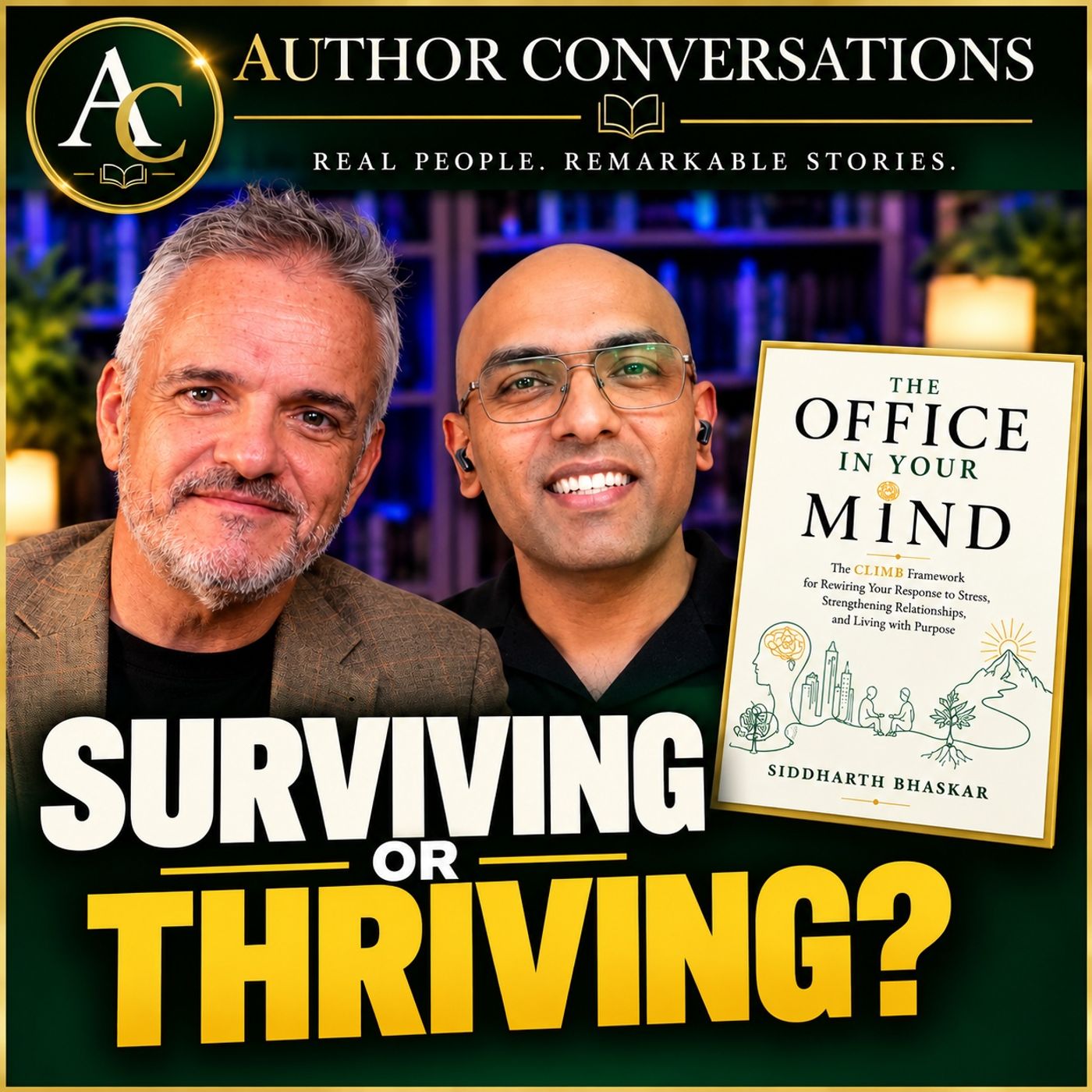
Are you truly thriving — or simply getting through each day? Siddharth Bhaskar, author of The Office in Your Mind, joins Chris Dabbs to explore how we can change our response to stress, strengthen our relationships and find a greater sense of...

 iHeartRadio

 Apple Podcasts

 Spotify

 Amazon Music

 Deezer

 Podchaser

 Spreaker

 Castbox

 YouTube
Key Takeaways
- Siddharth Bhaskar's book, The Office in Your Mind, draws on psychology, neuroscience, and mindfulness to help people navigate workplace stress and find greater purpose.
- The modern baseline for stress has steadily increased, causing many people to simply cope with daily life rather than truly thrive.
- Mindfulness goes beyond traditional meditation; it involves bringing intentional awareness and a slower pace to everyday activities like walking, eating, and working.
- Bhaskar introduces the CLIMB framework—moving from being clueless about blind spots to intentional practice, mastery, and eventually subconscious competence.
- Understanding the biological and psychological aspects of stress helps reduce reactivity in the brain's amygdala and improves both decision-making and interpersonal relationships.
Are you truly thriving — or simply getting through each day?
Siddharth Bhaskar, author of The Office in Your Mind, joins Chris Dabbs to explore how we can change our response to stress, strengthen our relationships and find a greater sense of purpose.
Drawing on psychology, neuroscience and mindfulness, Siddharth explains the personal experiences behind his book and introduces the CLIMB framework — a practical approach designed to help people move beyond coping and begin thriving.
In this conversation, Siddharth discusses workplace pressure, emotional resilience, mindfulness in everyday life, the difference between success and fulfilment, and how pausing before we react can lead to better decisions and healthier relationships.
Author Conversations with Chris Dabbs goes beyond the pages to discover the people, experiences and ideas behind remarkable books.
00:00 Introduction
01:00 The Office in Your Mind
02:10 Siddharth’s childhood and early resilience
06:06 Corporate stress and mindfulness
07:49 Career change, family separation and lost identity
10:25 Creating Breath of Life and the book
13:22 Are we surviving or thriving?
16:58 Stress, the brain and healthier relationships
22:06 Mindfulness beyond meditation
28:02 The CLIMB framework explained
32:07 Bringing mindfulness into workplaces and schools
36:39 How mindfulness changed Siddharth
40:09 Closing thoughts
Become a supporter of this podcast: https://www.spreaker.com/podcast/author-conversations-with-chris-dabbs--6905413/support.
Every book has a story beyond its pages.
In Author Conversations, broadcast journalist, presenter and newsreader Chris Dabbs sits down with the writers behind some of today’s most fascinating books to uncover the research, experiences and ideas that never made it onto the printed page.
Featuring bestselling and emerging authors from around the world, each episode goes beyond the blurb to explore the real stories behind the writing.
From untold historical discoveries and groundbreaking scientific research to personal journeys, business insights, faith, true crime and the human experience, every conversation is designed to inform, challenge and inspire.
Drawing on more than two decades of professional interviewing across radio, television and digital journalism,
Chris creates thoughtful, in-depth conversations that give authors the time and space to tell the stories that matter most.
Whether you’re searching for your next great read, fascinated by the creative process or simply enjoy intelligent, long-form conversations, Author Conversations offers a unique opportunity to discover the people, ideas and experiences behind remarkable books.
Real authors. Real stories. Real conversations.
Frequently Asked Questions
Who is Siddharth Bhaskar?
Siddharth Bhaskar is the author of The Office in Your Mind and a mindfulness practitioner who uses his personal experiences and insights from neuroscience to help professionals overcome corporate stress.
What is the CLIMB framework?
The CLIMB framework is a practical model introduced by Siddharth Bhaskar that helps individuals move from being clueless about their blind spots to developing intentional habits, mastery, and subconscious competence.
How can mindfulness be practiced without formal meditation?
Mindfulness can be integrated into daily life through intentional focus during routine activities such as mindful walking, mindful eating, or simply slowing down to observe physical sensations and thoughts.
What is the difference between surviving and thriving according to Siddharth Bhaskar?
Surviving involves merely getting through each day, paying bills, and managing responsibilities under constant stress, whereas thriving includes emotional well-being, healthy relationships, and a deep sense of purpose.
1
00:00:00,000 --> 00:00:15,000
[Music]
2
00:00:15,000 --> 00:00:19,600
Hi and welcome to author conversations. I'm Chris Dabbs, as usual.
3
00:00:19,600 --> 00:00:25,800
And today we've got quite an interesting chat. I think that a lot of you are going to find super interesting.
4
00:00:25,800 --> 00:00:33,200
Okay, so we spend a remarkable amount of our lives at work, don't we really? And at work we have to deal with deadlines,
5
00:00:33,200 --> 00:00:38,200
managing relationships and trying to meet everyone else's expectations.
6
00:00:38,200 --> 00:00:43,800
And even when the working day is over, our minds don't necessarily switch off today. And that mine doesn't.
7
00:00:43,800 --> 00:00:52,800
Anyway, my guest today believes that understanding what goes on inside our minds can help us change how we respond to stress.
8
00:00:52,800 --> 00:01:00,000
It can help us to improve our relationships. And perhaps most importantly, find greater purpose in our lives.
9
00:01:00,000 --> 00:01:07,000
Siddarth Baskhar is the author of The Office In Your Mind. A book that brings together ideas from psychology,
10
00:01:07,000 --> 00:01:14,400
neuroscience and mindfulness. And it introduces a practical approach. He calls the “CLIMB framework".
11
00:01:14,400 --> 00:01:22,200
But behind the book is Siddarth's own personal journey. One that has involved questioning how we live, what success really means,
12
00:01:22,200 --> 00:01:28,000
and where they're simply getting through each day is enough. You know, it can't be, can it?
13
00:01:28,000 --> 00:01:35,000
So Siddarth, welcome to Author Conversations. It's lovely to have you here. I'm really looking forward to watch out. How are you?
14
00:01:35,000 --> 00:01:48,000
Thank you very much Chris, first of all, for having me here for this chat. And I'm so much looking forward to having this chat with you so that we can explore more about this book and, you know,
15
00:01:48,000 --> 00:01:59,000
how the whole journey, band out or the last one year. So much looking forward. And yes, thank you very much. I'm doing good today. I hope your day has been fantastic so far.
16
00:01:59,000 --> 00:02:10,000
Yes, it's been yes. I'll go. Yes, I'll keep with that. Yes, it's been fantastic. So okay, well, great. Well, listen, set up before we get into the book itself.
17
00:02:10,000 --> 00:02:27,000
What I like to do is to really understand you, okay, the person who wrote it, because you suggested that this project, your book and client, grew out of your own experiences, your questions and your own personal development, rather than simply an academic interest in psychology.
18
00:02:27,000 --> 00:02:32,000
So what's that about then? Tell us about you. Why why you here now?
19
00:02:32,000 --> 00:02:48,000
Yeah, yeah. Yeah, thanks. I think that's an opportunity indeed for me to, in fact, go back to my childhood and talk a little bit about that as well, because there's a long story and there's a short story or the overall scheme of the team.
20
00:02:48,000 --> 00:02:58,000
So maybe I'll start with the long story first. Take you to my old child's days and the struggles that I've had.
21
00:02:58,000 --> 00:03:13,000
And then perhaps maybe then we can explore about what really entailed triggered me to start this whole journey of creating a mindfulness platform and the book, of course.
22
00:03:13,000 --> 00:03:35,000
1980s, that's where that's when I was born. We come from a small village from central India and a village with very limited capacities and hence the people living there also come with a very, very humble background.
23
00:03:35,000 --> 00:03:49,000
You know, typically small traders and farmers and stuff like that. I come from there and then things like essential things like which are necessary for your survival, like water, food, shelter.
24
00:03:49,000 --> 00:03:58,000
You have to strive for that. You have to work hard for that. To even get drinking water, we had to get a bowling in the morning at around four.
25
00:03:58,000 --> 00:04:07,000
Go to the pump miles away from our house before even the village gathers there to get water because that was a story for everyone.
26
00:04:07,000 --> 00:04:17,000
Things like quality education, I had to travel miles to basically go to a good school because there was no good school in my village.
27
00:04:17,000 --> 00:04:26,000
And also carry the responsibility of my younger brother. I was what? 10 then and my brother was seven.
28
00:04:26,000 --> 00:04:38,000
So, yeah, so all of that basically was my childhood struggle you may call or you may call it as an opportunity for me to be what I am today.
29
00:04:38,000 --> 00:04:46,000
What really happened during that time was while all of this was happening and it seemed now to me as a struggle.
30
00:04:46,000 --> 00:04:59,000
But then it was building something subconsciously which really helped me now to kind of navigate through the life's challenges subconsciously the resilience was getting built.
31
00:04:59,000 --> 00:05:08,000
There was capacity to even challenge the status quo and do something different.
32
00:05:08,000 --> 00:05:29,000
What's getting built and ultimately first to basically see through the struggles and see is there a way for me to kind of help others looking at their struggles generating perspectives and empathy so on so forth.
33
00:05:29,000 --> 00:05:50,000
So that happened but then life moved on I moved to a better city for my higher education than to Mumbai for my job got married got kids and you know how the whole life then goes on you know on money and work for yourself.
34
00:05:50,000 --> 00:06:06,000
But apparently the underlying theme of you know am I doing enough am I contributing to others lives consistently kept you know troubling me.
35
00:06:06,000 --> 00:06:18,000
While that was happening I also started mindfulness practice on my own so that I can regulate myself during the corporate stress that I was going through.
36
00:06:18,000 --> 00:06:33,000
At the same time I started raising neuroscience and psychology and stuff like that while all that happened the I also read about some of the statistics and I would like to read it out for you.
37
00:06:33,000 --> 00:06:57,000
There are basically one in seven adolescents who experience mental health issues like depression anxiety and exam pressure one in seven that's quite a huge number for the teens coming to the professionals and for the bread owners 40% of employees globally experience a lot of stress and anxiety the previous day.
38
00:06:57,000 --> 00:07:22,000
Another stats I would like to read out is around 12 billion hours get lost because of this stress and hence there is reduced productivity leading to almost to one trillion USD per year as as economic dilution.
39
00:07:22,000 --> 00:07:49,000
Now the point is not that you know this is leading towards a lot of economic issues and productivity but ultimately what's happening to the person who is feeling all that that's the ultimate question that you know kept me away at night coming to the short story what triggered for me to now do it.
40
00:07:49,000 --> 00:08:18,000
Last couple of years like it's been a year for me in Belgium now I shifted around December last year I mean this year and try to that I was in Malaysia for couple almost couple of years away from family because my family was in India my wife also works my kids were studying and at the same time she got posted to Belgium so she had to travel to Belgium my kids were briefly in India for some time I was in Malaysia.
41
00:08:18,000 --> 00:08:32,000
So there was a complete family split there and then we had to basically struggle to get together to kind of lead a better life ultimately staying away from family wasn't necessarily growth I would call it.
42
00:08:32,000 --> 00:08:43,000
So what I had to do is basically leave all of that in Malaysia and then get the kids first here in Belgium and then I left my job from Malaysia and travel to Belgium.
43
00:08:43,000 --> 00:09:12,000
In the meantime I was struggling to you know manage my own anxiety because then the whole identity that was developed over the last 20 years was getting dismantled as to what will I do if I don't work while I was managing those regulations I found a colleague with whom I started working on their project and started helping them but at the same time thought that this could become like one.
44
00:09:12,000 --> 00:09:30,000
Like one source of engagement for me while I will be there in Belgium so I basically created another identity put myself fully into it and thought I might carry this but that also didn't work out so you know in a very short span of time.
45
00:09:30,000 --> 00:09:57,000
It was like loss of identities twice and that was a bigger I would call devastating time for me because then I it took me almost to the to the trenches of despair and you know multiple emotions that went on it took me couple of months in fact to come out of all of that through my own practice of mindfulness.
46
00:09:57,000 --> 00:10:25,000
And then while I look back at it I see that my mindfulness practice actually helped me navigate through those challenges and when I say that there was a lot of effort that needs to be taken it's not just sitting and practicing but also I literally tracked my emotions on an hour basis for a few months and then saw how the growth is happening and how things are changing.
47
00:10:25,000 --> 00:10:54,000
So then the idea came back and I said if I felt that rejection because the business partnership didn't work out I had to lose my job and stuff like that but then the underlying question again came back as to if I have to go through this I could manage to come out of it why not others how can I help others and then came the idea of building a mindfulness platform out of my own practice through which I can democratize mindfulness and make it more.
48
00:10:54,000 --> 00:11:18,000
It's not just mindfulness and make it more relatable towards the corporate life because currently people still see it as a you know they see it towards the spirituality they see it somebody sitting in that whole posture thinking and you know navigating through the breath and something like that but it's not that it's like you have to live in the present moment and there are various traits that you develop.
49
00:11:18,000 --> 00:11:35,000
Now through the idea of building that whole platform which is called as breath of life it's currently in progress I also started writing articles about you know how people can regulate their emotions what are the different ways how we can build better relationships.
50
00:11:35,000 --> 00:12:04,000
And at the same time not only cope our self during stressful situations but at the same time how do we then come to the ground heal ourselves grounded and then thrive from there let's not just stop at grounding ourselves from coming out of stress but how do we then find purpose and then thrive in our lives and while those articles were coming to life that gave life to the book that I currently call as
51
00:12:04,000 --> 00:12:24,000
the office in your mind the initial name of the book was paying to purpose because that's that was the journey that I wanted to portray but I think to make it more relatable I think office in your mind is something that that gets released soon now.
52
00:12:24,000 --> 00:12:53,000
Yeah exactly wow so you've had a lot of experience coming up to this point now that in terms of you know great corporate experience and careers and then recovery but it's interesting how often writing begins with someone trying to make I guess from what you're saying sense of their own experiences you know whether you've had to move into a whole completely different culture so you have to you know again an identity there and then you have to work in that culture and you have to sort of really
53
00:12:53,000 --> 00:13:22,000
learn and then become a family again as you said you know your family was separated all over the world really and okay so let taking all of that then you've described this as your first book bringing together several areas that you've gradually become interested in you know the website looks great it looks informative I think you know this is one of the great things right but I one of the ideas in your work that particularly interest me actually is the kind of distinction between coping with life you know which is way more important
54
00:13:22,000 --> 00:13:51,000
which is what you're saying really and actually living it because you know plenty of us would probably describe themselves as reasonably successful something you know they're working there they're paying the bills supporting the families and the meeting you know kind of their responsibilities and stuff yet you know we might not necessarily feel very fulfilled what do you think about that absolutely I think that's where the crux of this whole book and you know my objective has been
55
00:13:51,000 --> 00:14:14,000
that we don't necessarily live the way we should be leaving what has happened over the last few years is and there is statistics over that as well though the level of stress in the work environment specifically and not only in the work environment but you know we take it home as well the level of stress that has increased in people's
56
00:14:14,000 --> 00:14:42,000
life is tremendous and you can check the last 20 years of trend the baseline of stress has gone up that means if we were living at a lower stress level before now the whole level of stress has gone up which has basically created a new normal now we consider it as yeah why not I am I'm I'm getting my bills paid I'm taking care of my family
57
00:14:42,000 --> 00:14:56,760
so it's okay for me to be stressed for a while yeah but that actually takes away your ability to live your life fully and we constantly keep
58
00:14:56,760 --> 00:15:08,000
ruminating about our deadlines maybe our bills that we have to pay and and all the all the bread that we have to offer our family while all of that is fine
59
00:15:08,000 --> 00:15:25,000
the ambitions are going to be there that should be that should be part and parcel of our journeys but at the same time how can we forget living why not we create a life that also is ambitious at the same time we
60
00:15:25,000 --> 00:15:44,000
leave it with the sense of calm with the sense of perspective better relationships giving ourself a bit of pause reflecting on it and seeing how can we then not only just ground ourself out of this stress but at the same time when look at
61
00:15:44,000 --> 00:16:04,000
what are the ways for me to live a better life and when I say better life driving actually is a subjective term isn't it for somebody driving and success can look like economic benefits or you know going up the ladder and corporate but higher ranks maybe power
62
00:16:04,000 --> 00:16:23,000
but for me thriving is while you achieve all of that you take care of yourself your emotional well being the way you respond to situations yeah you might you might be a business tycoon but if you cannot respond to somebody
63
00:16:23,000 --> 00:16:42,000
with calm and dignity maybe there is a way for us to an opportunity for us to look pause reflect and see can there be a different way of the response things will happen things will happen for us situations will come we will be ambitious we will grow but at the same time
64
00:16:42,000 --> 00:16:58,000
if you pause ourself and see if we can alter the response towards towards the event or people there are better outcomes that can be expected we will form better relationships out of it.
65
00:16:58,000 --> 00:17:27,000
Let me also talk about little bit on the relationship aspect there is a mindfulness suggest that you know when you take pause and there are evidences around that the reactivity in your amygdala which is a tiny part of your brain the reactivity goes down and you start developing a better preferential cortex which is the decision making part of your
66
00:17:27,000 --> 00:17:44,000
brain while that is happening that's giving us an opportunity to make better decisions and not just react to situations but at the same time respond to it now when you come to relationships specifically there is a term that alpha alpha
67
00:17:44,000 --> 00:18:02,000
if red addler add coin it's a German term it's basically pronounced it's a difficult word to pronounce it's pronounced as germines coughs cuffle which means social interest and community feeling.
68
00:18:02,000 --> 00:18:30,000
That's from a philosophical angle there is the same term from a biological lens as well which poor J Stephen poor J his theory about rental rental system that also talks about the social engagement system which means let's say you're in a meeting and you know
69
00:18:30,000 --> 00:18:54,000
your boss says something or you see an email pop up on your screen from your manager maybe something will shift in your body without you realizing that email could actually be better for you or could mean something else but you know the whole element of fear might come in that you know what is it about is did I miss any deadline or is there something wrong
70
00:18:54,000 --> 00:19:21,000
well that is happening what poor J says is there's a ventral vagal nerve that travels right from your brain towards your body and you can actually feel the sensations in your body as well and while that is happening when when that stress response is created we look for people around us for safety
71
00:19:21,000 --> 00:19:42,000
and hence the whole element that I want to tie here through forges VVS which is mental vagal system and Alfred Adler's social engagement theory is that we need people around us our well being is not just dependent on our cell we might look inside
72
00:19:42,000 --> 00:19:55,000
and do a lot of emotional regulation but biology as well as psychology talks about relational well being and hence people around us are really really important for us.
73
00:19:55,000 --> 00:20:16,000
Therefore it is important for us to even have better relationships how will that come that will come through we being mindful of how we react and respond towards situations and people around us and yes mindfulness gives us that opportunity for us to be responding better.
74
00:20:16,000 --> 00:20:43,000
I mean I pick you up on something there that you said about how you know success or you know be happy or whatever is all very subjective you said in the beginning that you know if you think about it with your upbringing where you where you could basically you know you were born you had a whole completely different life and I guess expectations to what you have indulge them now or what you had in the leisure before
75
00:20:43,000 --> 00:20:53,000
and I think that that's one of the things isn't it you know we always think about how say I sit here and I think to myself right I actually just want to be able to do my work I want to be a payment bills.
76
00:20:53,000 --> 00:21:11,000
But you know as you get older your priorities change you want to make sure that you keep that status quo right and that's the whole point about it and if you're in a corporate kind of environment like this which I used to be it's one you know it's one of those things that I think will that that experience will resonate with a lot of people
77
00:21:11,000 --> 00:21:35,000
you know and and also that part that you said about the email popping up in a meeting and you're there and we really do want to work to read it don't you know you know nobody sends you emails say hi hey you're doing right it's always been a big something else right so you know I and obviously the other issue here is of course that work doesn't necessarily finish and leave the office nowadays either does it you know
78
00:21:35,000 --> 00:21:52,000
remember those days you know we might physically be at home but mentally we're still replaying the conversations thinking about what people said deadlines worrying about tomorrow even and if you've got a phone or you've got your laptop how hard is it to keep away from that right I mean you know that's
79
00:21:52,000 --> 00:22:06,000
I mean you know that's really and your book begins by exploring how we respond to stress and why those reactions can stay with us all the way through and I love the way that you put in that all that nerve or the nervous nervous it or Vegas or
80
00:22:06,000 --> 00:22:18,000
the problem or what you have the guy you know yeah that I yes that's does a lot doesn't it I have to say I mean you know I but I lied to mindfulness is a word you know that we hear quite a lot now
81
00:22:18,000 --> 00:22:39,000
actually said earlier on you know it's not all about be sitting down and you know yeah putting yourself in some sort of meditate state or anything is it but I suspect that many people still associated with meditation even though you said no to that really I mean whilst it might sound nice to sit quietly and finding time you know in an already busy day that's
82
00:22:39,000 --> 00:23:00,000
really difficult to do right so for somebody who feels overwhelmed being told to find another half an hour for themselves might not be particularly helpful I don't think I mean my wife tells me this all the time you know just when I just sit there can't think yeah right really so how do you approach that then within your system
83
00:23:00,000 --> 00:23:15,000
yeah I think you're right while we are constantly chasing deadlines and you know or chasing many many things in our life and constantly ruminating like you said we carry the whole work
84
00:23:15,000 --> 00:23:44,000
and the office in our mind at home isn't it thinking about multiple things that may happen there and vice versa sometimes we carry the stress that happens in our house to the office as well and impacting both the places not necessarily we need to start giving a lot of time to just sit and do the practice like what comes to your mind when we talk about meditation on mindfulness you know maybe
85
00:23:44,000 --> 00:24:10,000
you know somebody sitting in the whole posture of meditation with closed eyes breathing breathing breathe out and stuff like that mindfulness is not necessarily just that of course that's one of the practice but mindfulness has to do a lot with how we are basically looking at the present moment
86
00:24:10,000 --> 00:24:30,000
it has to do a lot with whatever we are doing currently we do it with a lot of intentional looking into it that means even if I am reading something you know sometimes we might just glance through it or read it first but when I'm reading something
87
00:24:30,000 --> 00:24:50,000
am I really reading it word by word or maybe let me take another example of walking how do we walk we just constantly keep walking right we have to reach somewhere there is always this question in mind that you know I have 10 minutes and I have to reach that particular place so let me just walk past
88
00:24:50,000 --> 00:25:09,000
but given the opportunity we should if we do mindful walking which means we walk slowly and see the way our body is moving from heel to toes the whole movement of our feet
89
00:25:09,000 --> 00:25:29,000
and what happens during that moment in other parts of our body at the same time are there any thoughts and emotions that goes on in the mind while we are doing now why is it called mindful walking or or if I take one more example of maybe if somebody likes cooking mindful cooking for that matter
90
00:25:29,000 --> 00:25:49,000
do you really see or mindful eating for that matter do you really wonder what that particular thing that has come on your plate how does this taste or maybe how does the sound of chewing that particular thing is how is the smell sometimes in the given less time that we have
91
00:25:49,000 --> 00:26:08,000
skill we kind of just you know eat it and leave it but when we bring in intentional focus towards this activities these might sound to us as boring activities because we will have to really slow down watch the pace of our eating or walking
92
00:26:08,000 --> 00:26:26,000
and then see what's actually happening in our mind and our body that basically gives us an opportunity for us to live in that particular present moment and then really pause and see how our reaction to all these activities is
93
00:26:26,000 --> 00:26:44,000
let me just pick your other that because I think that it's quite an interesting point to make because at the end of the day you've got you know you can walk around you can do all those things as you say and they kind of automatic
94
00:26:44,000 --> 00:27:02,000
going to get here but taking the time to think about yourself or we were all trying to just I'm trying not to use the word relax right but to sort of clear mind maybe yeah I can see I can see the benefits of that I mean you know when I go cycling
95
00:27:02,000 --> 00:27:26,000
distance you know I kind of do that I try to anyway I try to sort of clear my mind but it's really difficult to do that isn't it you know but you've drawn on several different areas I think in developing this book really you've looked at the psychology you've looked at mindfulness you know your relationships and our relationships with others as you say you know especially in the office and being part of that community I think it's a really interesting
96
00:27:26,000 --> 00:27:45,000
point and you know finding a sense of purpose as well and that's not just about paying bills as it's other things but rather than leaving you know readers with a collection of ideas you know so big I there's a textbook right you brought them together I think in something that you call the climb framework right yeah so tell us about that
97
00:27:45,000 --> 00:28:02,000
tell us about that to have that works and and you know really what that's all about yeah yeah yeah thanks I think I was I didn't necessarily name it as climb before it just immersed out of my own experience as I told you I
98
00:28:02,000 --> 00:28:18,000
a few years back I read about this four stages of learning theory by it was actually coin by Martin M. Rodwell but it was made popular by Noel Burch during the 1970s
99
00:28:18,000 --> 00:28:33,000
when there are he talks about any new skill that we want to learn there are four stages of how we can actually learn that and how those four stages go is you know we start with unconscious in competence
100
00:28:33,000 --> 00:28:52,000
yeah that means we don't know what we don't know isn't it and then it goes from there to unconscious competence that means while we get mastery of doing something acquire a new skill but then ultimately it has to become so effortless
101
00:28:52,000 --> 00:29:02,000
and it has to be driven unconsciously we don't have to put effort to actually remember or do that particular thing so these four stages now that is where this whole climb
102
00:29:02,000 --> 00:29:17,000
framework actually immersed from and then there is another layer that you know I have slightly added to it the acronym stands for C is for clueless which is your blind spot you you don't know what you don't know
103
00:29:17,000 --> 00:29:30,000
right and then it moves from clueless towards looking into it now when we talk about if there is a blind spot we don't know about it how might we even look for it
104
00:29:30,000 --> 00:29:44,000
because we don't know what what we don't know so mindfulness intentionally brings that perspective of looking for something that we don't know
105
00:29:44,000 --> 00:29:59,000
it's not striving to know it but at the same time there are few blind spot that then emotion and we intentionally do that particular thing the whole part of awareness that we want to create comes from you know looking into it
106
00:29:59,000 --> 00:30:13,000
and then we move towards intending so once we know that there is something that we need to maybe work on so the intentional practice of working on it
107
00:30:13,000 --> 00:30:25,000
then basically moving towards mastering that particular thing which is the M in climb and then the being part of it which then basically if you have to tie in with the four stages of learning by no
108
00:30:25,000 --> 00:30:41,000
well but you are goes towards the unconscious competence that means you while you with efforts you master a particular skill but then it becomes so effortless later that you do it just subconscious you don't have to really put in effort
109
00:30:41,000 --> 00:30:57,000
towards doing that climb framework is is all about that it basically takes you from your blind spot towards you master a particular skill and then you know start being that particular thing
110
00:30:57,000 --> 00:31:25,000
that's the that's the whole point of a climb and I expressed it in a very simple terms but there is a whole bit of layering as to how it can be done mindfully and once you explore the book you will you will really know there are in fact models around it there are practices around it formal and informal mindfulness practices through which you actually navigate through this particular framework
111
00:31:25,000 --> 00:31:41,000
you know that's amazing because those four stages of learning if you like that's kind of like a mantra and mind actually because the first corporate job I had in our training that was it you know we were introduced to that immediately and it was
112
00:31:41,000 --> 00:31:57,000
I just opened up a whole world for me because you know think about being unconsciously incompetent about some table you know and then trying to get to being unconsciously competent yeah or the world of the end was really something else isn't it and then there's there's all sorts of things that
113
00:31:57,000 --> 00:32:07,000
moved on to readiness levels and all that sort of stuff as well and it's a really good point and you know I think if you've built something around that people you should be listening to that because that really
114
00:32:07,000 --> 00:32:19,000
would ground you I think and so I think so yeah I really like that idea I mean another aspect of the book that I find interesting is that you're not just looking at the you know the individual
115
00:32:19,000 --> 00:32:27,000
like you know just looking at how I asked what we can do for ourselves you know you were exploring relationships with colleagues friends and people around us as we said
116
00:32:27,000 --> 00:32:35,000
and how those relationships influence our well being as well and you know you've made it clear that writing the office in your mind isn't really the end of the project is it you know this is the whole point you've got
117
00:32:35,000 --> 00:32:51,000
ambitions to take these ideas further particularly to workplaces and schools that's got it help and to make mindfulness and emotional well being yeah more accessible to people because you know how many people do actually know about that framework or your
118
00:32:51,000 --> 00:33:01,000
framework and how much it can actually benefit them day to day at work and at home I mean that'd be great to be able to go on to talk like that to people I mean how's that
119
00:33:01,000 --> 00:33:17,000
getting on for you. Yeah as we spoke in the beginning itself that the idea was not just a staplet and release a book the idea is basically bring a platform that could democratize mindfulness
120
00:33:17,000 --> 00:33:29,000
and meditation mindfulness basically is seen as as I said is is more seen towards the spirituality aspect and while it is becoming more popular and especially in the
121
00:33:29,000 --> 00:33:39,000
west with the secular mindfulness wave that has come in the last few years what I'm intending to basically do is bring in a lot of
122
00:33:39,000 --> 00:33:53,000
relatability into mindfulness so if if corporates and teens have to be need to be the audience for this particular field and why did I first place chose this because
123
00:33:53,000 --> 00:34:05,000
I we spoke about the statistics and this is a major chunk of problem that I'm intending to solve through this particular program teens because that is the time where
124
00:34:05,000 --> 00:34:19,000
the identity formation is happening there they're trying to learn a lot of new stuff which which is I mean they're trying to establish their own identity during those years
125
00:34:19,000 --> 00:34:33,000
and what's happening in the brain is the prefrontal cortex is actually starting to develop during that time and the decision making is happening then hence these two particular audiences while I have worked in corporate
126
00:34:33,000 --> 00:34:43,000
culture so I know the pain points and at the same time I worked in schools and then I also draw my inspiration from my own kids because my son is a teen now.
127
00:34:43,000 --> 00:35:05,000
So all that put together brought these two audiences for me yes currently the mindfulness subject itself is far far away and the awareness is a low and hence I said through courses and a lot of research
128
00:35:05,000 --> 00:35:27,000
the idea is to basically make it more relatable to people for them to even understand what mindfulness is and then slowly slowly start practicing so this courses will come in place book is just one part of it in fact to bring it up here I have already started on the next book itself
129
00:35:27,000 --> 00:35:55,000
while we talk about it a little later because it just in the imagination and thoughts right now it's more towards the transcendental approach that we take but staying put with this book and the platform I think the idea is now to move towards building that platform and that two will be launched soon it'll take a few more months
130
00:35:55,000 --> 00:36:19,000
but yeah there will be short term courses there will be long term courses because mindfulness is not a one of activity it has to be while you can do stress regulation exercises in the short run get yourself calm grounded but at the same time you need to be in a state of mindfulness you need to be in a state of living your life fully which takes time which takes effort
131
00:36:19,000 --> 00:36:39,000
how do we make that seamless for people is the prerogative that I need to link to life and I think that it would be great setup when you do that and also I think that people resonate with all of this as well especially kind of I think you're the people that you try to talk to
132
00:36:39,000 --> 00:36:54,000
unfortunately we're kind of running out of time here it's always the way I find these conversations really fascinating really you know at the moment but I think that if we can bring you back to you personally here you know we've talked about your experiences the questions that
133
00:36:54,000 --> 00:37:08,000
are negative towards writing you know and the ideas you're now open to sharing to as a mind from us with a much wider audience through the book and you know eventually the website and the program I mean I imagine you know the seduct who began this journey is probably quite different from the one sitting here today
134
00:37:08,000 --> 00:37:24,000
they have you implemented a lot of your own I guess she happened here a lot of your own kind network so framework without really realizing that you've done that so which you say you were completely different person now than we're there I know we could all say that but what about you
135
00:37:24,000 --> 00:37:36,000
I can say I'm different I always say that we as human beings are working progress always in fact I know we are short on time but I'll just quickly share
136
00:37:36,000 --> 00:37:50,000
just last week I was coming back from my mindfulness practice with my mentors and it was raining heavily I was cycling and while I was deliberating over the discussion that I had with my mentor about the next project
137
00:37:50,000 --> 00:38:04,000
a thought came that we are we have not become what we are we are always working progress and I thought that could be like the title of the next book
138
00:38:04,000 --> 00:38:20,000
and of course to answer your question briefly yes I have I have seen the change in myself I give a lot of credit to the practice that I've been doing for whatever I am today
139
00:38:20,000 --> 00:38:31,000
because it would have been otherwise difficult for an anxious person like me like me which I have always labeled myself an anxious and impatient person before
140
00:38:31,000 --> 00:38:39,000
but I can see the benefits of the practice that I'm doing now and you know the composure that I carry sometimes
141
00:38:39,000 --> 00:38:54,000
and also the validation that I get from people when they say that you seem to be come so yeah I think that's how I feel that yes there's a difference in the way I used to react before I don't react now maybe
142
00:38:54,000 --> 00:39:02,000
no exactly well I mean it's good that you're right because the decision that it works I mean you know that's the thing right yes that's the good
143
00:39:02,000 --> 00:39:10,000
okay so before we wrap up there tell us about the website you know where can we find you online how can people connect to you all that sort of good stuff
144
00:39:10,000 --> 00:39:17,000
please about the book a lot can be explored on the book it will be released on 5th of November
145
00:39:17,000 --> 00:39:31,000
and it's a global release in the eyes realize other parts of the other parts as well and yeah the platform might take some time because there are courses that are going to get developed
146
00:39:31,000 --> 00:39:37,000
but just looking forward for people large number of people to basically take benefit out of the book
147
00:39:37,000 --> 00:39:45,000
exactly and if you're watching this after release date you're very lucky because you get straight into it as opposed to also you have to wait really for it all
148
00:39:45,000 --> 00:39:53,000
but sit up basket it's been wonderful talking to you I've learned a lot I'm going to go off now and try and put some bit to practice
149
00:39:53,000 --> 00:39:59,000
look a bit more of your website and see what else I can learn hopefully I can even if I put a little bit in
150
00:39:59,000 --> 00:40:09,000
it's got to be better than nothing right so I'm sure yeah yeah I've got to start somewhere exactly and that's the and at the moment I'm unconsciously incompetent
151
00:40:09,000 --> 00:40:15,000
so yeah I've got to bring it up from there really so sit up thank you very very much for joining the
152
00:40:15,000 --> 00:40:21,000
thank you very much for having me you know today Chris means a lot no no problem at all
153
00:40:21,000 --> 00:40:27,000
well I hope to see you for your next book or whenever you want to be able to tell people about your your platform
154
00:40:27,000 --> 00:40:33,000
but everybody listen I mean you know make sure that you think about this make sure you have a look at it and leave your comments down below
155
00:40:33,000 --> 00:40:39,000
because you know sit up well we'll want to know what you think about this or how difficult you find mindfulness
156
00:40:39,000 --> 00:40:45,000
or how simple you find it or even how you know that the whole mindfulness framework and the client framework
157
00:40:45,000 --> 00:40:53,000
could actually help you or how it has helped you so leave some comments down below and I'll see you guys next time on all the conversations
158
00:40:53,000 --> 00:40:57,000
I've been Chris Dabbs - Siddarth thank you again today it's really lovely to meet you
159
00:40:57,000 --> 00:41:01,000
thank you very much thank you everyone thank you for watching this
160
00:41:01,000 --> 00:41:03,000
thanks
161
00:41:03,000 --> 00:41:25,000
[Music]
162
00:41:25,000 --> 00:41:31,000
if you enjoyed this conversation you can watch more author conversations here
163
00:41:31,000 --> 00:41:41,000
[Music]
164
00:41:41,000 --> 00:41:51,000
[Music]