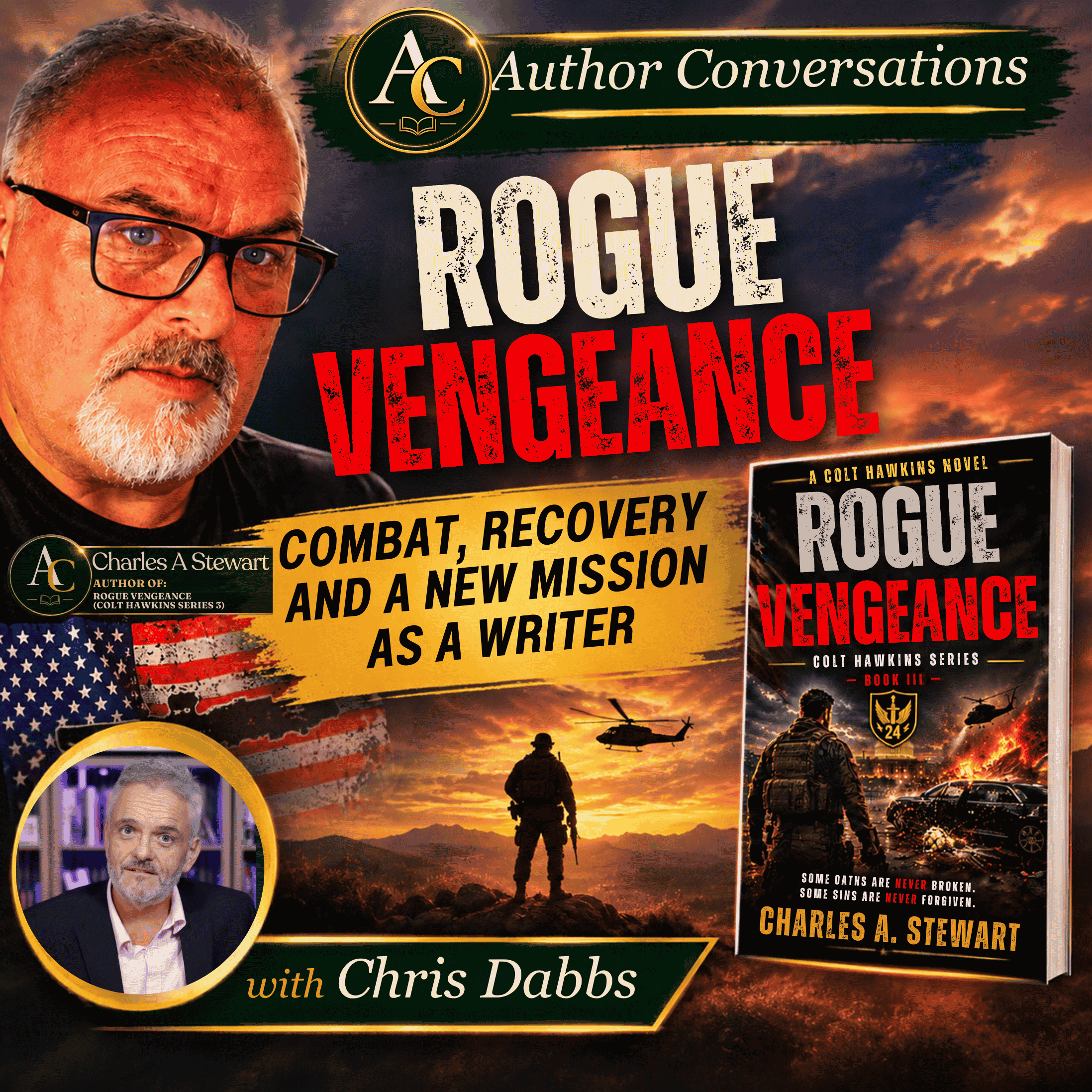
How Real Iraq War Sniper Missions Shape Military Thriller Fiction
When 26-year military veteran Charles A. Stewart sits down to write his military thriller novels, he does not rely solely on Hollywood tropes or imagination. Instead, he draws directly from actual combat deployments, special operations work, and high-stakes missions executed in places like Iraq to build authentic, gritty narratives that resonate with readers seeking genuine military realism.
Key Takeaways
- Real Iraq War combat experiences, including a specific sniper mission, form the psychological and tactical foundation of Charles A. Stewart's thriller novels.
- Task Force 24 characters are largely modeled on real individuals Stewart served with across his 26-year military career.
- Blending tactical accuracy with emotional vulnerability creates a more grounded and resonant reading experience than traditional action tropes.
- Writing fiction served as a constructive outlet for managing severe PTSD and traumatic brain injuries resulting from military service.
Bridging Reality and Fiction in Military Thrillers
For readers of modern military fiction, the line between Hollywood dramatization and actual battlefield realities can often blur. Many authors lean heavily into explosive set-pieces and invincible protagonists who single-handedly defeat entire enemy platoons. However, authentic military fiction requires a deeper understanding of operational tempo, unit cohesion, and the psychological weight of pulling a trigger.
Charles A. Stewart brings a rare level of authenticity to the genre. Having spent over two decades in the US military, including intensive combat deployments and special operations units, Stewart understands the precise cadence of tactical engagements. When he transitioned to writing during the COVID-19 pandemic—initially encouraged by his family and medical team to channel his experiences into journaling—he realized his actual combat memories offered powerful raw material for fiction.
In his second novel, Sky Thunder, protagonist Colt Hawkins wakes up from a realistic flashback and nightmare depicting a genuine sniper mission conducted during the Iraq War. Stewart deliberately chose to keep that sequence true to life, avoiding unnecessary embellishments to ensure that the tactical execution matches what operators actually experience in the field.
The Human Element Behind Task Force 24
Beyond the hardware, tactics, and operational planning, the true heartbeat of Stewart's novels lies in the interpersonal dynamics of his fictional Task Force 24. In the military, survival depends entirely on the person standing to your left and right. Stewart honors this fundamental truth by basing nearly every member of Task Force 24 on real-world colleagues, comrades, and friends.
By using real names where operational security allows, Stewart creates a lasting tribute to the people he served alongside. This commitment to real human connections prevents his characters from feeling like generic action figures. Instead, protagonists like Colt Hawkins and Dr. Liberty Starr grapple with complex emotional baggage, relationship pressures, and the difficult ripple effects of high-stakes decision-making.
Navigating PTSD and Recovery Through Writing
The journey from active-duty special operations to published author is rarely straightforward. Stewart faced significant physical and psychological hurdles after leaving the military, including diagnoses of severe PTSD and seven traumatic brain injuries sustained throughout his career. Depression and intrusive memories posed daily challenges.
Writing became a vital therapeutic outlet. What started as basic daily journaling under the guidance of his doctors eventually blossomed into a disciplined writing habit. During the pandemic lock-downs, Stewart harnessed his military focus to tackle his debut novel, Cry of the Eagle. Pushing past the initial frustration of drafting, he famously unlocked a 10,000-word day that proved he could master the long-form storytelling format.
This disciplined approach allowed him to process difficult memories while constructing intricate plots around timely geopolitical threats, such as high-frequency satellite constellations falling into the wrong hands.
Why Tactical Authenticity Matters to Readers
Readers today are remarkably perceptive. They can quickly spot when an author is faking technical details or relying on clichés. When military veterans pick up Stewart's books, they find a refreshing level of precision regarding weaponry, unit communication, and operational stress.
At the same time, civilian readers appreciate the emotional depth. Stewart ensures that his stories explore what happens when the firefight stops. By grounding his characters in genuine vulnerability, he proves that the most compelling aspect of military fiction isn't just the mission itself—it's the toll those missions take on human relationships and personal recovery.
Conclusion
Translating real-world military service into engaging fiction requires a delicate balance of tactical precision, emotional honesty, and narrative pacing. Charles A. Stewart has successfully bridged his decades of special operations experience into a thrilling book series that honors the real people who served alongside him.
To hear more about his transition from the military to writing, the true stories behind Task Force 24, and his creative process, Listen to the full episode of Author Conversations with Chris Dabbs.
Frequently Asked Questions
How are real military missions incorporated into Charles A. Stewart's novels?
Stewart takes specific tactical events from his 26-year military career, such as a real sniper mission in Iraq that opens his second book, Sky Thunder, and weaves them directly into his fictional narrative without leaving out critical operational details.
Are the characters in Task Force 24 based on real people?
Yes, almost every member of Task Force 24 is based on real people Stewart served alongside during his military career, with many using their actual names where security permits.
Why do authors choose to use real-life combat experiences in fiction?
Drawing on real-life combat experiences adds an authentic layer of emotional weight, tactical accuracy, and psychological realism that pure imagination cannot replicate, helping readers connect deeply with the characters.
How long did it take Charles A. Stewart to write his debut novel, Cry of the Eagle?
Stewart wrote his first military thriller novel, Cry of the Eagle, in just 90 days during the COVID-19 pandemic lock-down as a way to channel his experiences and journaling into a creative format.